
What Calgary Businesses Do With Office Items They No Longer Need When They Move | Calgary Office Movers

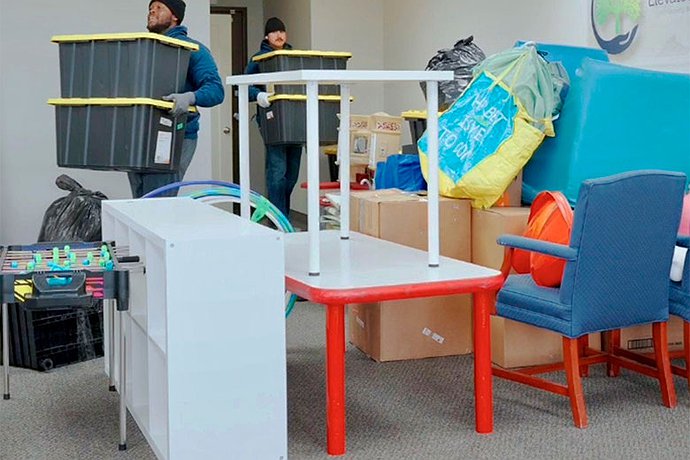
An office relocation in Calgary is not just a logistics exercise. It is also a decision point for everything that does not make it to the new space. When a company changes offices, the items left behind rarely receive a plan: desks and chairs that no longer fit the new layout, monitors and phones from a recent equipment refresh, and filing cabinets that were already surplus before the move began. The default outcome is a skip bin in the parking lot or a series of increasingly urgent calls to a disposal service.
There is a more useful outcome. Calgary has a well-established network of charitable organizations that accept office furniture, working equipment, and supplies from businesses. Calgary Office Movers works with eight of those organizations as confirmed donation partners, coordinating drop-offs as a built-in part of every commercial move. This article explains how the process works, what organizations accept from businesses, and what your company needs to know before move day.
Why Office Relocations Produce More Surplus Than Any Other Type of Move
The volume of surplus generated by a commercial move is categorically different from that of a residential one. A household move produces a sofa and a bag of clothing. An office move produces an entire fit-out worth of furniture, stacked against new furniture already ordered for the destination. It produced equipment that was replaced before the move but was never properly disposed of. It produces supplies ordered in bulk that will not transfer because the new office already has them, or because storage space at the new address is more limited.
The scale problem compounds quickly. A 20-person Calgary office moving to a new space with a different floor plan might leave behind 20 to 30 desks, 40 to 60 chairs, a boardroom table, reception furniture, filing systems, and assorted equipment. None of this disappears by default. It requires a plan, a vehicle, and someone responsible for executing it, at exactly the moment when every available person is focused on getting the business operational at the new address.
The consequence is predictable. Functional office furniture ends up in landfill, not because businesses want to dispose of it, but because coordinating a separate donation run during a commercial move is genuinely difficult to prioritize. Building donation logistics into the move itself is the only approach that reliably changes the outcome.
What Calgary Charities Accept From Businesses - and How the Process Works
Calgary has a network of charitable organizations that actively seek donated goods from both residential and commercial sources. Calgary Office Movers works with eight of these organizations as confirmed donation partners. Each serves a different segment of the community, and each has its own intake criteria, capacity limits, and categories of items it can accept. All eight are profiled in detail below.
Office Furniture Is Among the Most Needed Items in Calgary's Charity Network
Office furniture is among the most in-demand categories of donated items across Calgary's charity network. Organizations that furnish transitional housing units, shelter facilities, and community program spaces consistently need desks, chairs, tables, and storage furniture. These items are expensive to purchase new and durable enough to serve multiple subsequent users across years of use.
From a business perspective, office furniture is also the most difficult category to dispose of responsibly when moving. Individual pieces are large, require vehicle space, and cannot simply be left for regular waste collection. The gap between wanting to donate and actually donating is almost entirely logistical. A commercial moving crew that can load and deliver office furniture as part of the existing route eliminates that gap.
What Businesses Need to Know About Intake Criteria
Charitable organizations in Calgary have defined intake criteria that reflect their programs, available storage, and the populations they serve. Some organizations focus on household-scale items and accept office furniture only in specific categories. Others have broader intake policies and can absorb larger volumes from commercial sources. Condition requirements apply consistently: items must be clean, functional, and free of significant damage. Non-functional equipment is generally not accepted for donation, though separate electronics recycling options are available through the City of Calgary.
For businesses, the practical implication is that not every item flagged for donation will be accepted by every partner. A commercial moving company with pre-established relationships across multiple organizations can assess items on-site and match them to the partner best positioned to receive them, rather than requiring the business to research and contact organizations independently.
Coordinating a Donation During a Commercial Move - the Right Window
The logistics of donating during a commercial move work best when donation items are identified and separated before move day, not on the day itself. Pre-move planning, ideally one to two weeks before the move date, allows the moving crew to factor drop-off routing into the overall logistics plan and confirm intake capacity with the relevant charity partners in advance.
For items identified only on move day, the process can still work, but with reduced routing efficiency. The key constraint is that items intended for donation must be physically separated from those going to the new office before loading begins. A clearly labelled donation staging area in the current office is the most practical way to ensure this happens without creating confusion or delays on move day.
What Your Business Can Donate During an Office Move in Calgary
The following categories reflect the most common surplus items generated by commercial relocations in Calgary. Accepted items vary by organization, but the categories below represent the most consistent donation opportunities across all eight of Calgary Office Movers' charity partners.
Office Furniture
Desks, workstations, ergonomic chairs, task chairs, boardroom tables, meeting room chairs, reception desks, storage cabinets, bookshelves, filing cabinets, and lounge furniture are all in demand across Calgary's charity network. These items are typically the highest-volume surplus category in an office move and the most logistically challenging to donate without a moving crew to handle transport.
Condition requirements are straightforward: items should be structurally sound, clean, and free of significant damage. Minor cosmetic wear is generally acceptable. Upholstered chairs and seating in good condition are typically accepted, though some organizations apply Alberta fire safety requirements to items going into regulated housing facilities.
Office Equipment
Working monitors, desktop computers, laptops, tablets, multifunction printers, phones, and desk peripherals are accepted by several of the eight charity partners. The key requirement is functionality: equipment must be in working condition at the time of donation. Non-working electronics should be directed to the City of Calgary's electronics recycling program rather than donated.
For businesses donating computers and devices, it is worth confirming that data has been wiped from storage devices before the items are transferred. Data sanitization is the business's responsibility and should happen before the equipment is staged for donation. Calgary Office Movers does not provide data wiping services, but the crew can advise on staging and transport once the items are cleared.
Supplies and Stationery
Unopened office supplies, including paper, envelopes, binders, notebooks, pens, and general stationery, are accepted by some organizations and can be useful to community programs that operate on tight supply budgets. Partially used supplies and opened consumables are generally not accepted. For businesses with significant supply surpluses, it is worth flagging this category separately at the time of booking so the crew can identify the best-fit organization.
What Cannot Be Donated?
Items typically not accepted by Calgary charities in a commercial context include: non-functional equipment of any category; items with significant physical damage or contamination; perishable supplies; materials requiring hazardous waste disposal; confidential documents or hard drives that have not been data-wiped; and large industrial or specialized equipment that exceeds standard handling capacity. For items in these categories, Calgary Office Movers can advise on appropriate disposal or recycling options available in Calgary.
Corporate Social Responsibility and the Case for Donation Coordination
For Calgary businesses, how office surplus is handled during a move is increasingly a visible part of their environmental and social commitments. Sending functional furniture and equipment to a landfill is not simply a missed opportunity. It is a decision that reflects on the company's approach to responsible resource management, and one that employees, clients, and stakeholders are increasingly aware of.
Donation coordination during a commercial move offers a straightforward way to align a practical business process with CSR objectives. Items that would otherwise be disposed of are redirected to organizations that provide housing support, employment programs, and community services across Calgary. The donation is documented and attributable. The effort required of the business is minimal when the moving company handles the logistics.
"Office relocations consistently produce the largest volumes of reusable furniture and equipment we see in a single move. When donation logistics are integrated into the commercial move plan from the start, the difference in what gets diverted from landfill is substantial. It is one of the highest-impact changes a business can make in the course of a standard office relocation." Adam O'Keefe, moving industry expert
For businesses that report on environmental metrics or sustainability commitments, donation records from charity partners can help document waste diversion. This is worth discussing with the receiving organization at drop-off.
How Calgary Office Movers Coordinates Donation Drop-Offs
Calgary Office Movers works with eight established Calgary charities as confirmed donation partners. The coordination process is built into every commercial move: businesses flag items for donation at the time of booking or on move day, the crew assesses what can be accepted based on each partner's current criteria, and the drop-off is handled as part of the move route. No separate arrangement is required from the business.
The company's pre-established relationships with each partner organization mean that intake capacity, accepted item categories, and drop-off logistics are known before the crew arrives. The office manager or facilities contact does not need to research which charity accepts what. The crew handles the matching on-site.
Calgary Office Movers specializes in commercial moving services in Calgary, including full office relocations, partial office clearouts, and after-hours moves. Donation coordination is available across all of these service types, not only during full relocations.
After-Hours Availability
Calgary Office Movers operates seven days a week, including evenings and holidays, at the same rate. For businesses that need to minimize disruption to office operations, after-hours moves allow physical relocation outside business hours. Donation coordination during after-hours moves works the same way as during standard business hours. Items flagged for donation are assessed and dropped off along the route, with no additional scheduling required by the business.
For Partial Clearouts and Fit-Out Changes
Donation coordination is not limited to full office relocations. Calgary Office Movers can also coordinate donation drop-offs during partial clearouts, furniture refreshes, and fit-out changes where a business is disposing of surplus items without a full relocation. If your company is updating its office layout, replacing furniture, or clearing storage, the same process applies: identify items, book the service, and the crew handles the rest.
Calgary Office Movers Eight Charity Partners
All eight of Calgary Office Movers' donation partners are based in Calgary. Below is a full profile of each organization, including what they accept from commercial sources.
WINS - Women in Need Society

WINS operates thrift stores across Calgary and funds programs supporting women and families affected by poverty, crisis, and domestic violence. Office furniture and household goods donated through WINS are distributed through their store network and directly to families in need. WINS is particularly well-positioned to absorb office-scale furniture donations.
What they accept from businesses: Office furniture, household goods, clothing, kitchenware, linens, and small appliances.
Alpha House Calgary

Alpha House provides shelter and crisis support for individuals affected by addiction and homelessness, including a 24-hour detox centre and transitional housing programs. Donated furniture from commercial sources is used to furnish transitional housing units, ranging from office clearouts to someone's first stable living space.
What they accept from businesses: Furniture, bedding, household items, clothing.
Calgary Drop-In Centre

One of Canada's largest emergency shelters, the Calgary Drop-In Centre, has served over 1,000 individuals daily since 1961. Donated items from businesses are distributed directly to shelter guests and transitional housing residents, often within days of the donation being processed.
What they accept from businesses: Clothing, footwear, bedding, personal care items, and small household goods.
Inn from the Cold

Inn from the Cold logo
Inn from the Cold serves Calgary families experiencing homelessness, operating emergency family shelter and transitional housing programs. Donated furniture and household items are used to furnish family housing units as families transition from shelter to permanent housing.
What they accept from businesses: Furniture, household items, children's items, clothing, and kitchenware.
Easter Seals Canada - Alberta

Easter Seals Canada Alberta logo
Easter Seals Canada supports Albertans living with physical disabilities through equipment funding, camp programs, and community support. In Alberta, proceeds from donated goods fund adaptive equipment and access to programs. For commercial donors, the quality and resale value of donated items directly determine the level of program funding generated.
What they accept from businesses: Furniture, household goods, electronics in working condition.
The Salvation Army

The Salvation Army operates one of Calgary's broadest social service networks, including food assistance, shelter, addiction recovery, and family programs. Their thrift stores accept a wide range of donated goods from commercial sources, with proceeds funding all programs simultaneously. The Salvation Army is among the highest-volume donation centres in Calgary and is well-equipped to handle larger commercial donations.
What they accept from businesses: Furniture, household goods, clothing, kitchenware, electronics, books, and small appliances.
The Mustard Seed (The Seed)

The Mustard Seed serves Calgarians experiencing poverty and homelessness through food, shelter, housing support, and recovery programs. Their community store provides donated goods directly to program participants at little or no cost, with furniture and household items going to people currently in recovery or transitioning into stable housing.
What they accept from businesses: Clothing, household items, kitchenware, linens, and small furniture.
Goodwill Industries of Alberta

Goodwill Industries of Alberta operates retail donation stores across the province, using proceeds to fund employment training and job placement for Calgarians with barriers to work. Goodwill accepts the broadest range of donated items among the eight partners and is particularly well-positioned to accept commercial donations, including office furniture, working electronics, and equipment.
What they accept from businesses: Furniture, clothing, household goods, electronics, books, sporting goods, and small appliances.
How the Process Works - Step by Step
The steps below apply to both full office relocations and partial clearouts. For businesses planning a full move, we recommend reviewing our office moving checklist alongside this process to integrate donation planning into the broader move timeline.
1. Identify and stage donation items before move day. Walk through the current office and physically separate items that will not go to the new address. Label the donation staging area clearly. For larger volumes, such as a full furniture fit-out, doing this one to two weeks before the move date allows the crew to plan routing and confirm charity intake capacity in advance.
2. Flag donation items when booking the move. Let the team know at booking that donation coordination is required, and provide a general description of item types and volume. This allows the crew to plan truck space, routing, and partner matching before arriving on-site.
3. The crew assesses items on move day. Based on the condition and each partner's current intake criteria, the crew confirms which items can be accepted and by which organization. This happens on-site. The office manager or facilities contact does not need to research intake criteria in advance.
4. Donation drop-off is handled as part of the move. Items are loaded and delivered to the relevant charity partner as part of the existing route. The business does not need to arrange a separate vehicle, contact the charity independently, or have staff present at the drop-off location.
For questions about the full commercial move process, our office moving FAQ covers common questions about timing, pricing, and scope of service.
Planning an Office Move in Calgary? We Handle the Donation Coordination.
Calgary Office Movers coordinates donation drop-offs with eight trusted Calgary charities as a built-in part of every commercial move. No separate trips. No additional coordination from your team. Just flag the items you want to donate when you book, and we handle the rest.
We operate seven days a week, including evenings and holidays, at the same rate. After-hours office moves with donation coordination are available across all service types.
Frequently Asked Questions
Can we donate items from a full office fit-out?
Yes. Full fit-out donations, in which a business donates the majority of its existing office furniture, are handled the same way as partial donations. For larger volumes, advance notice at the time of booking allows the crew to plan truck capacity and confirm intake availability with the relevant charity partners before move day.
Do you coordinate donations for partial clearouts, not just full moves?
Yes. Donation coordination is available for partial office clearouts, furniture refreshes, and fit-out changes, not only during full relocations. If your company is updating its office layout or clearing surplus items, the same process applies. Book the service, identify the items, and the crew handles staging, transport, and drop-off.
Do we receive any documentation for the donation?
Documentation for charitable donations is handled by the receiving organization, not by the moving company. If your business requires a donation receipt for tax or CSR reporting purposes, we recommend contacting the relevant charity partner directly after the drop-off. Calgary Office Movers can confirm which organization received the items, but the receipt itself is issued by the charity.
What if some items are too worn to donate?
The crew can advise on-site. Items that do not meet the condition requirements of any of the eight charity partners will be identified before loading. For items that cannot be donated, Calgary Office Movers can advise on disposal and recycling options available in Calgary, including the City's electronics recycling program and bulky item disposal services.